


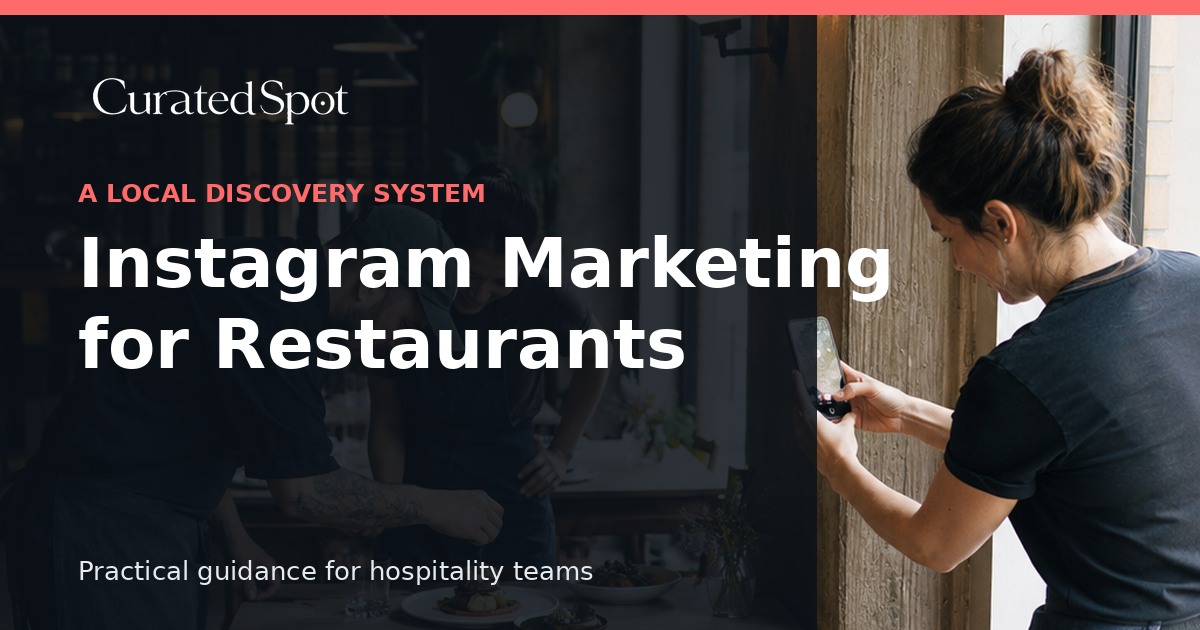
Instagram marketing for restaurants works when content reduces uncertainty and gives the right local audience a reason to act. The goal is not a prettier posting calendar. It is a repeatable system that shows the food, place, occasion, and people truthfully, then connects attention to a measurable next step.
Instagram Insights gives professional accounts metrics such as views, accounts reached, interactions, and accounts engaged. Those metrics are useful, but they should be interpreted alongside menu views, reservations, directions, and returning demand.
Design around the guest decision
Choose a specific audience and occasion before choosing a format. A weekday lunch, late dinner, first date, family brunch, and private event each need different proof and a different next action.
Show the details that help someone decide: representative dishes, current prices where appropriate, atmosphere, entrance, seating, location context, dietary options, service rhythm, and booking availability.
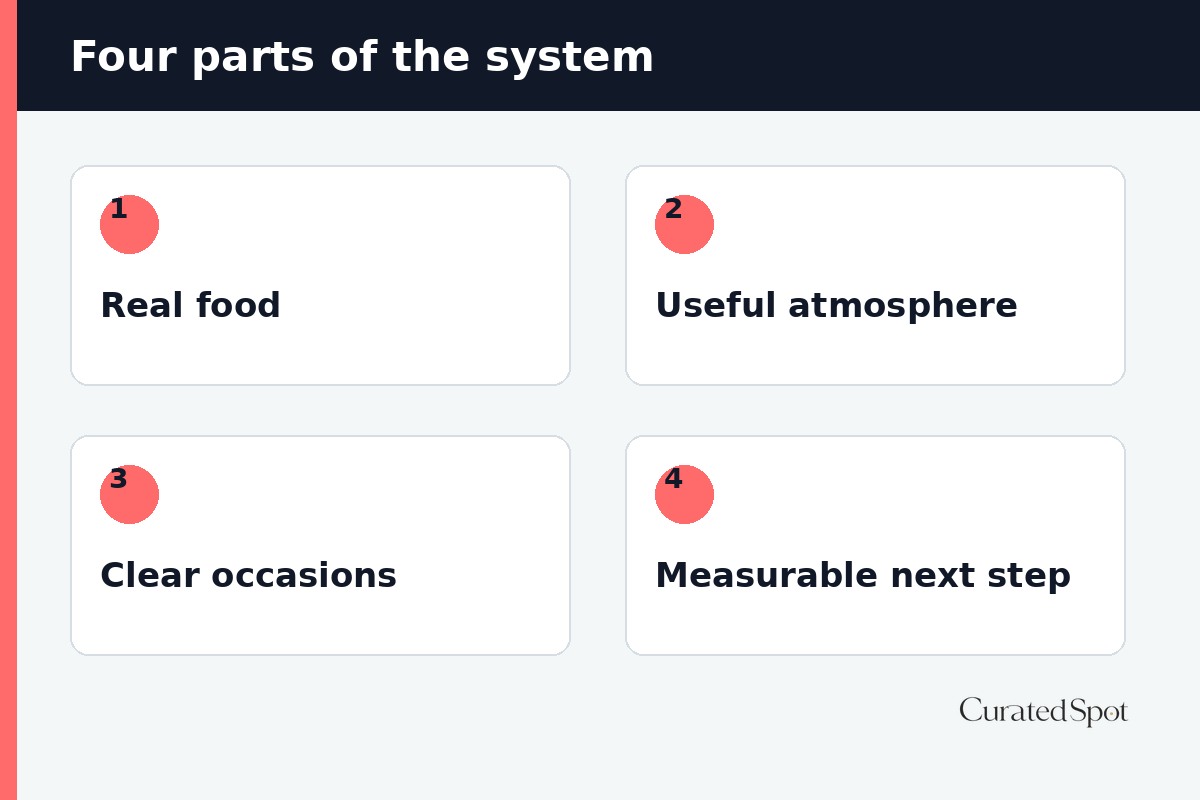
Use four content jobs
A balanced system uses real food, useful atmosphere, clear occasions, and a measurable next step. Food close-ups without context can earn attention but still leave the guest unsure about price, place, or suitability.
Create a reusable evidence library during normal operations. Record accurate captions and rights information so the same material can be adapted responsibly.
Choose native formats deliberately
Use a single image for one strong proof point, a carousel for a sequence or comparison, and short video when movement or process improves understanding. Stories can support time-sensitive updates when the connected account and workflow allow them.
Do not publish the same crop and caption everywhere. Instagram needs an immediate visual hook, concise context, accessible alt text, and a CTA that fits available link behaviour.
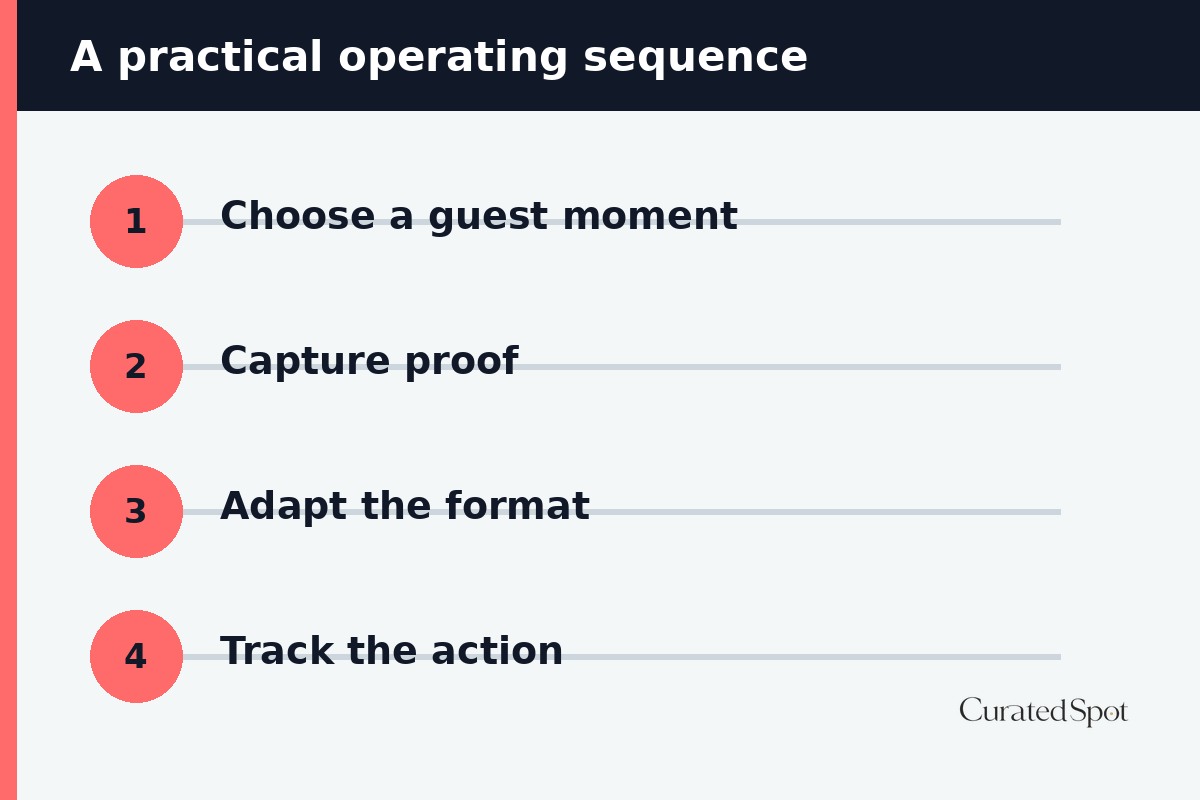
Build a weekly capture-to-publish workflow
First choose the guest question. Then create a shot list, capture factual material, verify menu and service details, edit for mobile, write the caption, check rights, publish, and record the tracked destination.
Keep the workflow small enough to repeat. One strong carousel and one useful short video can outperform a week of filler when each asset has a clear job.
Measure beyond likes
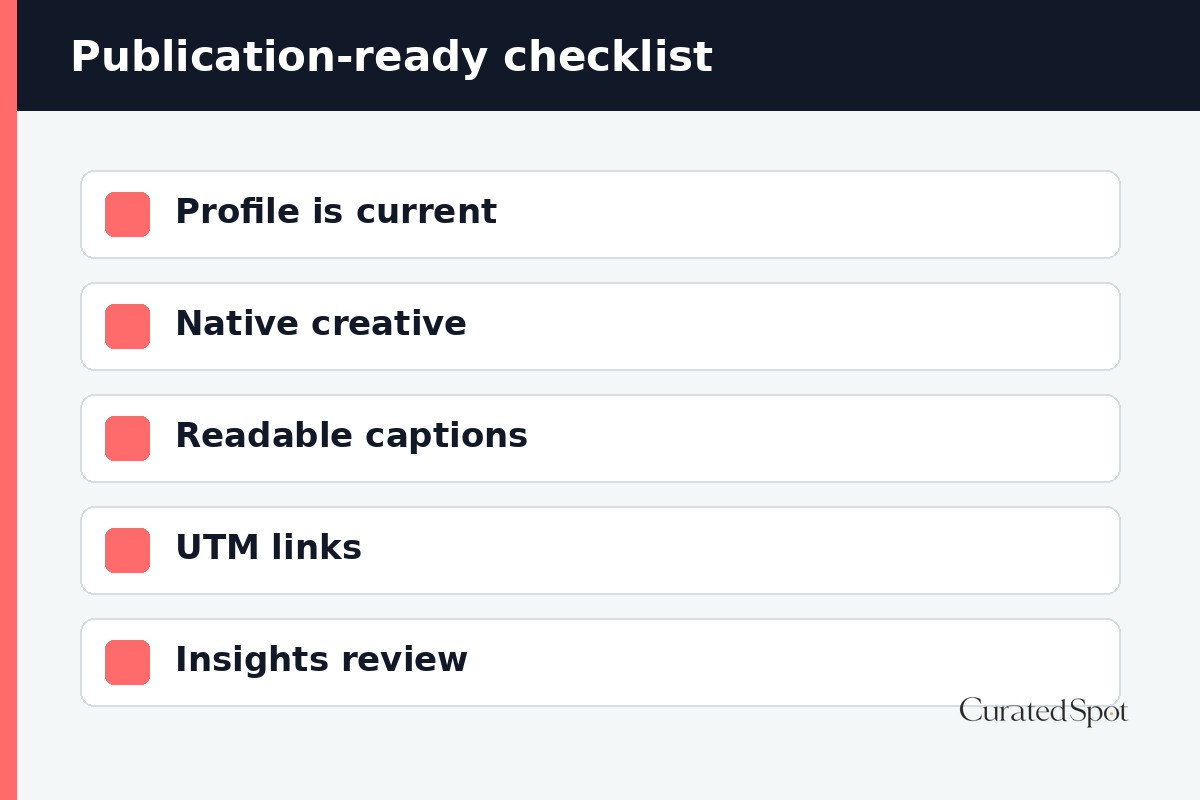
Review reach and interactions, but also track saves, shares, profile actions, website sessions, menu views, reservation starts, and completed actions where available. Use unique UTM content values for different creatives.
Compare posts by purpose. A dish story, local guide, event announcement, and reservation post should not be judged by the same single metric.
Common mistakes
Avoid blurry menus, obsolete prices, excessive text on images, generic stock photography, undisclosed material relationships, irrelevant hashtags, repetitive cross-posting, and engagement bait.
Do not pressure staff or guests into manufactured participation. The strongest content system comes from a real experience that the team can document honestly.
A practical 30-day plan
Week one: fix profile facts, bio destination, brand files, and tracking. Week two: capture the four content jobs. Week three: publish distinct formats with consistent campaign naming. Week four: compare downstream actions and refine the next month.
Document what the team learned about audience, occasion, creative, placement, and conversion rather than declaring a winner from one post.
Run a decision-quality self-audit
Before publishing or funding work around instagram marketing for restaurants, ask a second person to follow the complete user journey on a phone. They should be able to identify the restaurant, understand the promise, verify the current facts, find the menu or relevant evidence, and complete the intended next action without guessing. Record broken links, unclear labels, mismatched hours, inaccessible text, obsolete images, and any claim that lacks a direct source.
Then separate what the team knows from what it assumes. Verified business facts belong in the website and profiles. Editorial recommendations need an explained basis. Experiments need a hypothesis and a stop rule. Platform metrics need a defined time window and should not be presented as audited financial results. This distinction keeps the work useful for people and extractable for search systems without overstating certainty.
Finally, assign ownership. Name who checks the venue facts, who approves copy and media, who verifies rights and disclosures, who tests tracking, and who reviews outcomes. Schedule the next review before publication. A maintained system will outperform a technically impressive launch that no one updates after the first month.
Frequently asked questions
Does every restaurant need Instagram?
No. Use it when the target guests use the platform and the team can maintain accurate, useful content.
How often should a restaurant post?
Choose a sustainable cadence based on useful material and operational capacity, not an arbitrary daily quota.
What should a restaurant post first?
Start with current food, atmosphere, location context, a clear occasion, and the easiest useful next action.
Are Reels always better than images?
No. Use video when motion or process adds value; use images or carousels when they explain the decision more clearly.
What is a good restaurant carousel?
A sequence that helps a guest understand a menu, occasion, process, neighbourhood route, or practical choice.
Should prices appear in posts?
Include them when price is important to the decision and the information can be kept current.
How should links be tracked?
Use consistent UTM source, medium, campaign, and content values for each clickable placement.
Which Instagram metrics matter?
Use reach and interactions for content learning, then connect them to profile actions, sessions, and business outcomes.
Do hashtags drive restaurant growth?
Relevant hashtags can support classification, but they do not replace strong creative, local relevance, or a useful offer.
Can guest photos be reused?
Only with appropriate permission and rights. Record the consent and intended use.
Should posts be cross-published unchanged?
No. Adapt framing, copy, CTA, crop, and link behaviour for each platform.
What makes Instagram content accessible?
Readable contrast, captions for video, concise on-image text, and useful alt text improve access.
How can a restaurant avoid generic content?
Anchor each post in a real dish, place, person, process, occasion, or verified local insight.
Should every post sell?
No. Every post needs a purpose, but some should answer, orient, or build trust rather than push a transaction.
How long should results be tested?
Use several comparable posts and enough time to observe downstream behaviour before making a budget or strategy decision.
Take the next step with Curated Spot
Use this framework to improve one measurable part of the local discovery journey. Explore Curated Spot for Business, review how Curated Spot works, or submit a spot when venue information needs review.
Primary sources
Editorial verification: 21 August 2026. Platform features and policies can change; verify current documentation before implementation.