



A restaurant marketing budget should fund the smallest reliable system that can create, convert, and retain demand. Start with accurate discovery information, a working menu and reservation path, measurement, and reusable creative. Add paid reach only when the offer and conversion path are ready.
There is no responsible universal percentage for every restaurant. A new venue, a mature neighbourhood business, a seasonal destination, and a multi-location group have different economics and goals. Build the budget from contribution, capacity, priorities, and evidence.
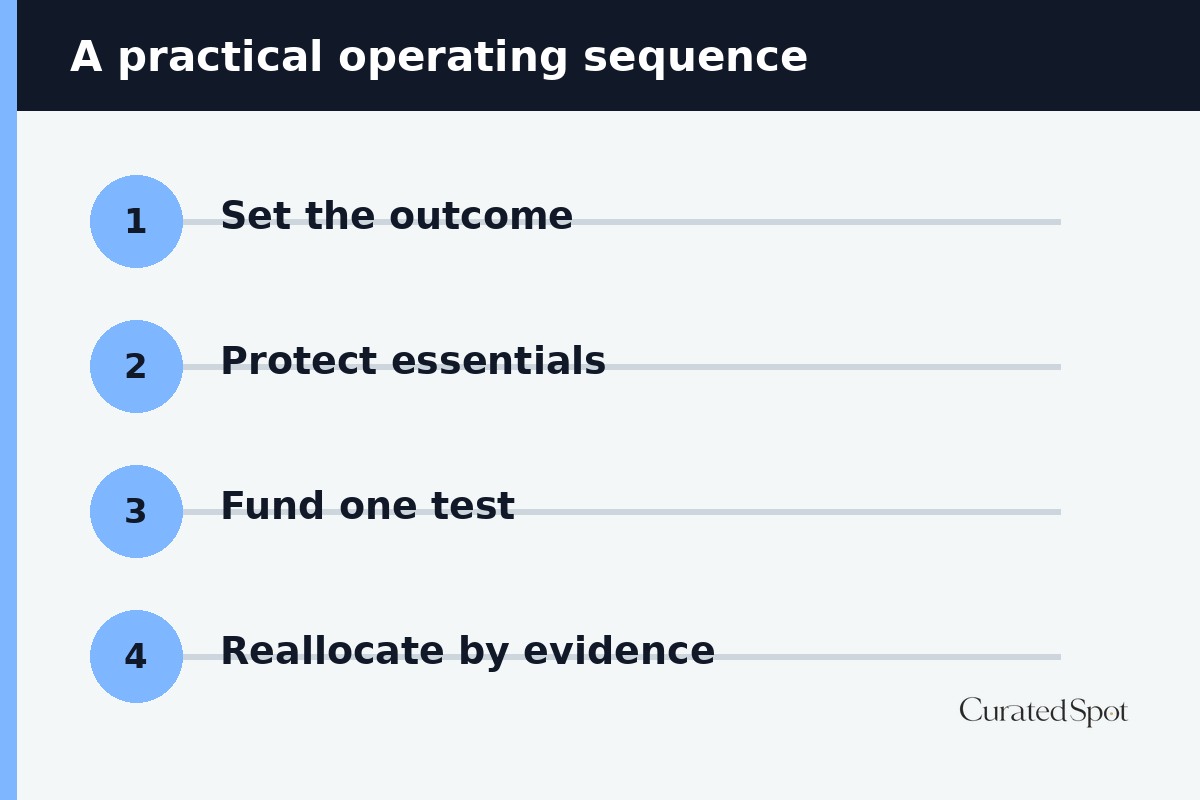
Define the commercial outcome
Choose one primary 90-day outcome: qualified reservations, direct orders, demand for a quiet daypart, private-event leads, or repeat visits. Define the audience, occasion, offer, and conversion event.
A line item without an intended decision is overhead. Every funded activity should have an owner, a measurable role, and a review date.
Protect the foundation first
Fund profile maintenance, website and menu accuracy, booking or ordering reliability, analytics, consent and privacy requirements, and a core library of truthful visual assets before buying more attention.
A broken conversion path wastes paid and organic demand. Test the full journey on mobile, including confirmation and handoff to any provider.
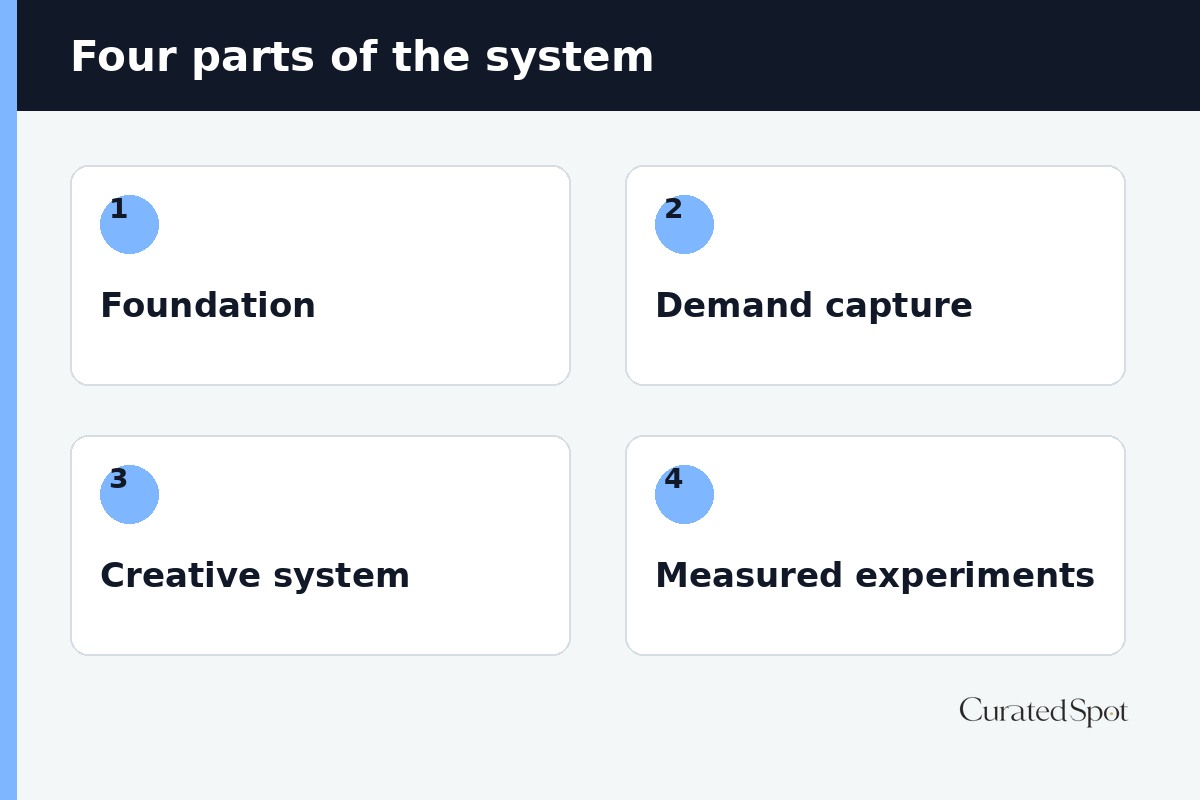
Use four budget layers
Layer one is foundation. Layer two is demand capture through high-intent search and local discovery. Layer three is the creative and content system. Layer four is bounded experiments with explicit stop rules.
Protect the first layers from being consumed by fashionable campaigns. Experiments should be small enough to fail without endangering essential operations.
Budget from unit economics and capacity
Estimate the contribution from the action being promoted, not just revenue. Consider variable food, payment, delivery, and service costs, then set an acquisition ceiling that leaves room for risk and repeat behaviour.
Also check capacity. Spending to fill an already constrained service can shift demand without adding useful profit, while a targeted weekday program may use idle capacity more effectively.
Create a campaign decision table
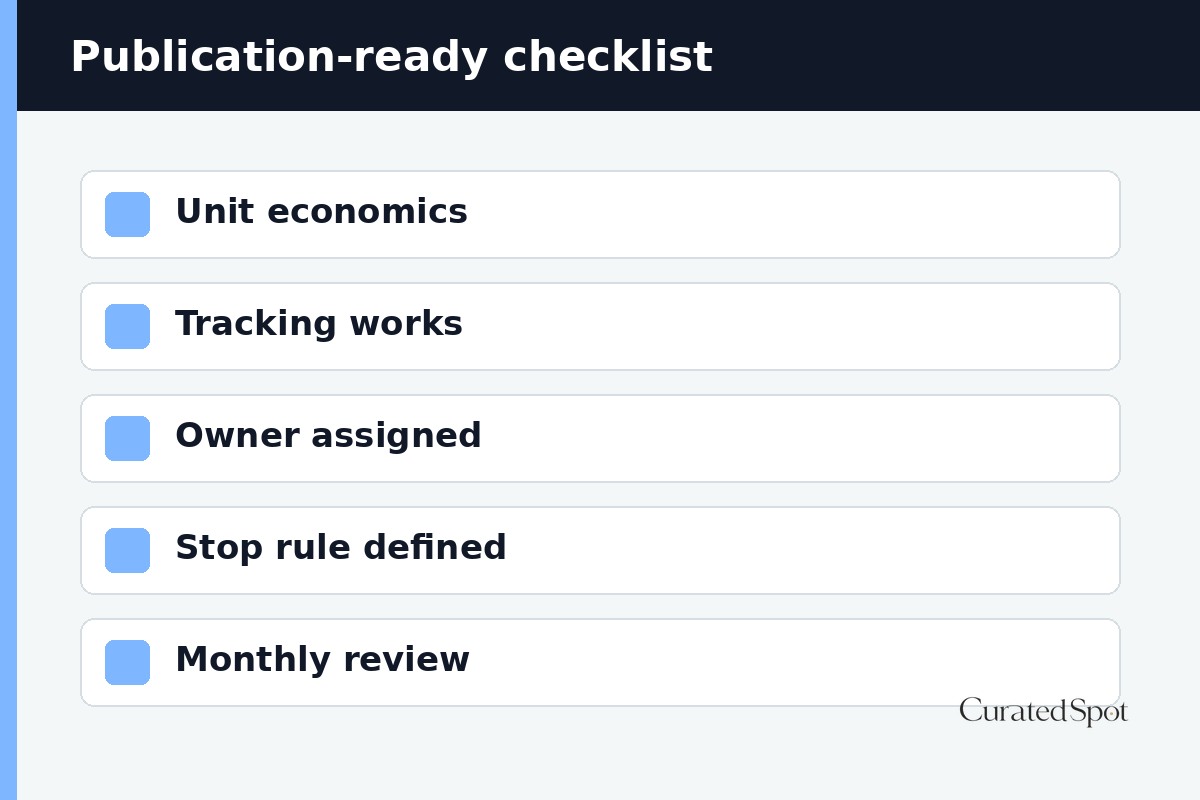
For each activity record the objective, audience, cost, owner, landing page, tracked event, expected learning window, and stop or scale rule. Separate production cost from media spend so weak creative is not blamed on the channel.
Use UTM parameters consistently and verify that the booking or lead event is recorded. Do not assign monetary values unless the business can defend them.
What to fund first
Prioritize accurate local profiles, mobile menu and booking UX, conversion tracking, current photography, high-intent pages, retention permissions, and one focused demand program.
Delay broad awareness buys, constant discounting, expensive rebrands, large creator programs, and multi-channel expansion when the basic guest journey is not working.
Monthly reallocation
Review spend, qualified actions, contribution assumptions, capacity, and operational notes monthly. Continue essentials, scale repeatable winners cautiously, improve weak conversion steps, and stop experiments that cannot produce useful evidence.
Preserve a test log. The purpose is organizational learning, not a story that every campaign succeeded.
Rulați un audit de calitate decizională.
Înainte de publicare sau finanțarea lucrărilor în jurul. buget de marketing pentru restaurante, cereți unei a doua persoane să urmeze complet parcursul utilizatorului pe un telefon. Aceasta ar trebui să poată identifica restaurantul, să înțeleagă promisiunea, să verifice faptele actuale, să găsească meniul sau dovezile relevante și să finalizeze acțiunea dorită fără a ghici. Înregistrați linkurile rupte, etichetele neclare, orele nepotrivite, textul inaccesibil, imaginile învechite și orice afirmație care nu are o sursă directă.
Apoi separați ceea ce echipa știe de ceea ce presupune. Faptele verificate despre afacere aparțin site-ului web și profilurilor. Recomandările editoriale au nevoie de o bază explicată. Experimentele necesită o ipoteză și o regulă de oprire. Metricile platformei necesită o fereastră de timp definită și nu ar trebui prezentate ca rezultate financiare auditate. Această distincție menține munca utilă pentru oameni și extractibilă pentru sistemele de căutare fără a exagera certitudinea.
În cele din urmă, atribuiți responsabilități. Numiți cine verifică faptele despre locație, cine aprobă textul și media, cine verifică drepturile și dezvăluirile, cine testează urmărirea și cine revizuiește rezultatele. Programați următoarea revizuire înainte de publicare. Un sistem întreținut va depăși un lansament tehnic impresionant pe care nimeni nu îl actualizează după prima lună.
Întrebări frecvente
What percentage should a restaurant spend on marketing?
There is no universal responsible percentage. Base the budget on goals, economics, capacity, maturity, and measured evidence.
What should be funded first?
Fund accurate discovery data, a working menu and conversion path, tracking, and reusable creative before paid reach.
Should a new restaurant spend more?
A launch may require higher temporary investment, but the amount must still fit cash flow, capacity, and a defined plan.
How should paid ads be tested?
Use one audience, offer, landing page, conversion event, bounded budget, learning window, and stop rule.
What is contribution margin?
It is revenue remaining after relevant variable costs; use the restaurant’s own accounting definitions for decisions.
Should discounts come from the marketing budget?
Track discounts separately because they affect price and contribution, not only promotion cost.
How much should go to content?
Fund enough to create an accurate, reusable evidence library and platform-native assets tied to real campaigns.
Is reach a sufficient KPI?
No. Reach is an exposure signal and should be connected to qualified actions and business outcomes.
How often should budgets be reviewed?
Review monthly, with faster checks during launches or short campaigns.
Should agencies and software be included?
Yes. Include media, production, people, tools, fees, discounts, and internal time for a true program cost.
What is a stop rule?
A predefined condition that pauses or changes a test when spend, time, tracking, or quality thresholds are not met.
How should UTM links be named?
Use consistent lowercase source, medium, campaign, and content values that distinguish platforms and creatives.
Can marketing solve low capacity?
Marketing can shape demand, but spending into a constrained service may not add profitable volume.
What should be delayed?
Delay broad expansion, vanity production, and complex partnerships when basics or measurement are not ready.
How is the next month allocated?
Protect essentials, improve the weakest conversion step, scale proven work carefully, and reserve a bounded learning budget.
Faceți următorul pas cu Curated Spot
Folosiți acest cadru pentru a îmbunătăți o parte măsurabilă a călătoriei de descoperire locală. Explorați Loc Curat pentru Afaceri, revizuiți cum funcționează Curated Spot, sau trimite un loc când informațiile despre locație necesită revizuire.
Surse primare
- Google Analytics: Constructori de URL-uri
- Google Analytics: Set up events
- Instagram: Despre Insights
Verificare editorială: 21 august 2026. Caracteristicile și politicile platformei pot suferi modificări; verificați documentația actuală înainte de implementare.